Wednesday, April 5, 2023

False Narrative 4: The Defendant Speaks (sort of)

 Kristina Berster might be technically innocent until proven guilty, but in the public’s opinion she was a terrorist until proven otherwise. The Vermont trial of an alleged “terrorist” revealed the danger of guilt by association and how disinformation creates a false narrative. 


By Greg Guma


Chapter Four


The Defendant Speaks (sort of)


The courtroom was crowded with supporters, reporters, gadflies and government observers when Kristina took the witness stand on a Tuesday in October. After remaining silent for three months, the alleged “terrorist” suspect was about to present her defense.
           She had attempted to cross the border from Canada, she explained, due to a mixture of fear and hope. She’d been seeking refuge from a “counter-terrorist” fever in her homeland. “I wanted to start a new life,” she said, “to live openly once again, to have a legal existence. I was no longer able to go on with life underground.”
           As a student at the University of Heidelberg almost a decade earlier she had been part of the anti-war movement and joined an alternative therapy project. The purpose of the Socialist Patients Collective was to “find out the reasons why people feel lonely, isolated and depressed and the circumstances which caused these problems,” she explained. But in June 1971, as a political crackdown on dissent swept West Germany, members of the group were accused of criminal association, based on the testimony of a police informer who later recanted
.

Kristina spent six months in detention, including three months in solitary confinement. In 1972, she was finally released. But a year later she faced another trial. At this point she went underground and left the country. The next years were spent in Holland, North Africa, the Middle East, and France. But after German industrialist Hans Martin Schleyer, a former SS official by the way, was killed after his kidnapping she realized that it wasn’t safe for her in Europe either.

In 1978, after the death of former Prime Minister Aldo Moro in Italy, leaving the continent felt like a matter of survival. Stern magazine, Germany’s version of Life, had printed the pictures of 34 “most wanted terrorist suspects.” Kristina made the list.

“Everyone arrested as an alleged terrorist is detained for between two and three years in complete isolation,” she told the court. Before she could say more, the prosecution objected. The testimony was stricken, and the judge banned further statements on the political aspects of the case.

William Gray’s cross examination had a different objective. By using phone logs, asking why she left Europe, and about the origins of her fake passport, he was probing for prior contact with Ray, the New York City boutique owner who had helped her reach the border. Gray’s questions implied the possibility of a conspiracy; in other words, the FBI’s scenario. This “simple border case” was really a vehicle to publicize a so-called plot linking foreign terrorists and US activists. Conviction on a minor border violation would not be enough.

During her second day on the stand Kristina was asked about her help getting into the US. The instructions had come from Chilean refugees living in Paris. This intrigued Gray. But he was even more eager to know where she had lived during her underground years, a line of inquiry she and her lawyers wanted to avoid. She had stayed in Libya and South Yemen, Middle East countries out of favor with the US, and her answers might prejudice the jury. But taking the Fifth would undermine her credibility.

The judge urged the lawyers to strike a deal. Their agreement was that the countries be referred to as A and B. Berster would simply admit that she felt safe during the time she spent there.

On re-direct Bill Kunstler probed her decision to leave France — not just where and who, but why. The answer was blocked. Neither Gray nor the judge wanted testimony about her fear of persecution. 

“Mr. Gray opened that door,” snapped Kunstler. 

“No, he hasn’t,” the judge shot back. They were close to the confrontation that had looked inevitable since the opening moments.

A day earlier, Kunstler had issued a warning when Coffrin let Gray ask about her underground years. “All right, Judge. You are opening it,” Kunstler said.

“I am not controlling this,” the judge replied. It was a strange admission.

“All right, as long as you are on notice that now we are going full blast,” countered Kunstler. To which the judge replied hotly, “You may not be allowed to go full blast.” That was also a warning.

Kunstler shifted to another line of questioning. Why didn’t Kristina think it was wrong to enter the country secretly? It was a direct extension of questions Gray had already asked. He objected anyway.

Kunstler prowled the chamber, flashing angry glances at the prosecutor and the judge. Circling the prosecution table he returned to the podium and pounded on his notes. “I want to get to her state of mind, and why she thought she was not wrong.”

Coffrin wouldn’t budge: No testimony on West Germany would be admitted. Kunstler was boiling mad. Shouting, he charged that the judge had ruled consistently against the defense. If the jury had been watching, the outburst might have resulted in a contempt citation. But they had already been taken out.

A decade after the Chicago 8 trial, William Kunstler hadn’t lost his power to provoke. This time around, his powerful yet studied rage led to a private conference in which the judge merely reamed him out for “impugning” the integrity of the court.

By the following day, Coffrin’s attitude had softened. Kristina would be allowed to explain why she felt that her actions had not been wrong. “I had been accused, originally, unjustly of things I had not done,” she explained. “I was wanted for associating with people suspected of terrorism, and I knew that other people suspected and in jail had died under mysterious circumstances.”

Gray objected, but the testimony continued. About lying to border officials, she said, “I was afraid of being detained, checked out. If police agents found out I would be deported right away and I wouldn’t get to contact lawyers and ask for asylum.”

But why pick the US? “I spoke the language,” she said. “It had customs and culture similar to Europe. I thought the US was independent of Germany. I thought I could find understanding and support for my situation, since this country has a long tradition of accepting refugees.”

When Kristina left the witness stand the defense rested its case. There was much she hadn’t been permitted to share. Yet she had said enough to raise questions about the prosecution’s case. Specifically, her testimony poked holes in the conspiracy charge and left the impression that an essentially innocent woman had been forced to hide her identity for five years. As he saw it, US Attorney Gray felt he had to challenge both her memory and her honesty.

It worked out differently. Two of the government’s rebuttal witnesses ended up, under oath, contradicting their own statements. They’d been called to show that Kristina had unimpeded and frequent contact with a lawyer during her first 24 hours in custody. She had testified that she wasn’t permitted calls for more than a day.

Donald Peck, the stoic Border Patrol agent who had questioned her until early morning, at first testified that he had allowed Kristina to call a lawyer immediately. Cross examination revealed that his own report of the incident, filed soon after the arrest, showed a multi-hour delay. He couldn’t explain the discrepancy.

Next, James Aamodt, an Immigration agent on hand the morning after her arrest at the Swanton police headquarters, talked about Kristina’s calls to and from attorneys. She had denied the calls. Aamoldt, who had since become Case Officer for the prosecutors, said there had been three. Once again cross examination revealed a different story.

Aamodt eventually admitted that, despite what he had written in a report to the US Attorney, she had only one conversation, at most. Several other calls from lawyers had been received, but they hadn’t been allowed to speak with the prisoner.

Borderline perjury didn’t dampen the prosecution’s hunger to impeach the defendant. Nor did it lead them to admit there was some special government interest in the case. Neither the FBI nor West Germany was influencing their strategy, the lawyers still insisted. But conflicting reports had trickled out. 

Before the trial, Gray and his assistant had spent almost a week at Justice Department briefings, including two meetings with Attorney General Griffin Bell. During the case they received calls from the West German consulate, whose spokesman described the New York office as “swamped” with work on the Berster case.

German media was intrigued from the start, and sent correspondents to cover the trial’s opening days. Later Stern magazine hired two German translators from Vermont to collect as much information as possible and bring it back personally to the Hamburg office. Press outlets in West Germany continued to label Kristina a terrorist accomplice, claiming that they had obtained a photo of her in a French airport with the sister-in-law of a terrorist. 

If it existed, the airport evidence wasn’t used or even mentioned in court. It might have been a lie, or perhaps a hint that Kristina had been under surveillance even before she arrived in Canada.


Next: The Therapeutic State

False Narrative: Eight Chapters

Sunday, April 2, 2023

Georgia Powers & Celia Mudd: Reclaiming Untold Stories

She was uncomfortable with rumors distorting her relationship with Martin Luther King Jr. But Georgia Powers realized that her life, like many, contained secrets and hidden truths. One concerned her ancestry.


Commentary by Greg Guma


Our lives are haunted by secrets — things kept from us by society, friends, even our own families. Just when we think the whole story is on the table, another revelation forces us to reconsider how we look at the world, our leaders, and ourselves.

        This was brought home for me during several visits to Kentucky, where I spent time with one of that state’s most beloved civil rights leaders, Georgia Davis Powers. Invited to discuss a book she wanted to write about one of her ancestors, I learned surprising things not only about the suppressed history of a Black family, but also about the life of Martin Luther King Jr.

Georgia Davis Powers in 2004

        Powers, who died in 2016, was the first African American and the first woman to be elected to Kentucky’s State Senate. That was in 1967. She served five terms over the next 20 years and was a delegate to the Democratic National Convention four times between 1968 and 2004. She was also State Chair of both Jesse Jackson for President campaigns. 

        By 1967, she had already participated in countless marches held for open housing in Louisville, as well as marches for sanitation workers in Memphis and St. Petersburg. Along the way, she had gotten to know King. 

        On April 4, 1968, he was assassinated on the balcony of a Memphis motel as he prepared to support striking Black sanitation workers there. Although James Earl Ray initially confessed to the crime (later recanting), doubts about the full circumstances persist. For example, former FBI agent Donald Wilson, who investigated the murder, later presented evidence he claimed to have found in Ray’s car — slips of paper that might support charges of a conspiracy involving federal agents. But Wilson hadn’t produced the evidence earlier, he claimed, because he didn’t trust other investigators and feared for his family’s safety. 

        The King family questioned the official version and was eager to see Ray get a new trial before he died of liver cancer.

        In a way, it is easier to accept that King was the victim of a secret conspiracy than to face other facets of his life. As Powers put it, "He was a great man — but he was still a man." 

        Like Bill Clinton, whose accomplishments as president were overshadowed by the relentless investigation of alleged personal misbehavior, King was hounded by FBI Director J. Edgar Hoover, who hoped to discredit the civil rights leader by exposing alleged "womanizing." For decades, many civil rights leaders dismissed such charges as mean-spirited attempts to sully King’s memory and discredit his historic achievements.

        Powers certainly had no intention of doing that. On the contrary. She had worked closely with King, organizing to end discrimination in public accommodations and employment and pass open housing laws. During her first term in the Kentucky legislature, less than a month before King’s death, she spearheaded passage of a statewide open housing bill.

        But her relationship with King was more than professional. As she revealed in her 1995 book, I Shared the Dream, their work together had led to a love affair that continued until the last moments of his life. Keeping that secret for almost three decades, she went public only after other civil rights leaders released inaccurate accounts of their relationship and the events surrounding King’s death. 

        She was particularly upset by comments in an autobiography written by Ralph Abernathy, King’s close friend and confidante. Though willing to attribute Abernathy’s misstatements to illness and a poor memory, Georgia Powers felt compelled to set the record straight. "When Dr. King’s life is researched," she wrote, "I want the part relating to me to be available in my own words. It is my own history as well, both the good and the bad."

        It began with mutual admiration, she explained, and "progressed into a deepening friendship in which we shared opinions, confidences, and laughed often." She called him "M.L.," and he called her "Senator." But King was under tremendous pressure, and ultimately turned to Georgia for intimacy and emotional support. Although they sometimes discussed issues and strategies, his main unmet need was time to let his hair down and set his cares aside.

        "Some people called him a prophet, and compared him with Jesus," she recalled. While she also believed that he was divinely inspired, "I knew Martin had all the imperfections, foibles, and passions of a mortal man." A meticulous person with an affection for silk suits, he enjoyed laughter and jokes, barbecued ribs and soul food, not to mention the company of attractive women. In short, "he had a good appetite for life."

        King also had a strong sense that he wouldn’t get to see his visions come to pass. Tired and melancholy one night, he told her, "I’m just as normal as any other man. I want to live a long life, but I know I won’t get to."


        Powers was in Memphis with King on the day he died. The previous night he had confided, "I’ve never been more physically and emotionally tired." On April 4 they waited most of the day to see if a temporary restraining order against the planned demonstration would be lifted. But King was adamant. Regardless of what the court decided, he promised, "We will march on Monday." 

        When Abernathy asked whether he feared what might happen, King answered slowly, "I’d rather be dead than afraid."

        As the meeting broke up and the group prepared for a soul food dinner, King brushed past Georgia on his way out the door. "I’m looking forward to a quiet and peaceful evening," he said softly. "Don’t make any plans." They were the last words he ever spoke to her. Moments later he was shot.

        Looking back, she regretted that her actions may have hurt others, especially King’s wife. But despite those feelings, she never regretted her decision, realizing that it wasn’t merely a tawdry affair. "When we were together," she recalled, "the rest of the world, whose problems we knew and shared, was far away. Our time together was a safe haven for both of us. There we could laugh and speak of things others might not understand. He trusted me, and I him, not to talk about it."

        As the years passed, however, Georgia became increasingly uncomfortable with the rumors that distorted their relationship. She also realized that her life, like so many, contained secrets and hidden truths. One concerned her own ancestry; although she didn’t know the identity of her father’s father, she eventually learned that he was White. Another involved her great aunt, Celia Mudd, who was born into slavery in 1859 but eventually inherited the rural Kentucky farm on which she had spent all her life. As a child, Georgia often asked how it happened. For her parents and other family members, it was apparently a story better left untold.

        Nevertheless, over the years she managed to uncover much of the true story. The key was a will dated March 15, 1902, in which Sam Lancaster, whose father had bought the Nelson County farm over 60 years earlier, left it to his most trusted employee — the former slave whom Georgia Powers knew as Aunt Celia. That fateful decision led to a court battle with Sam’s surviving brother, and the predictable rumors that Celia and Sam had been lovers. But a medical examination proved conclusively that this was impossible. At the age of 42, Celia Mudd was still a virgin.

        Although the case went to Kentucky’s highest court, most newspapers declined to report about it. A Black woman inheriting more than 500 acres of land from a White man apparently wasn’t considered news. Neither was the fact that Celia Mudd went on to become a local philanthropist, admired by Blacks and Whites alike.


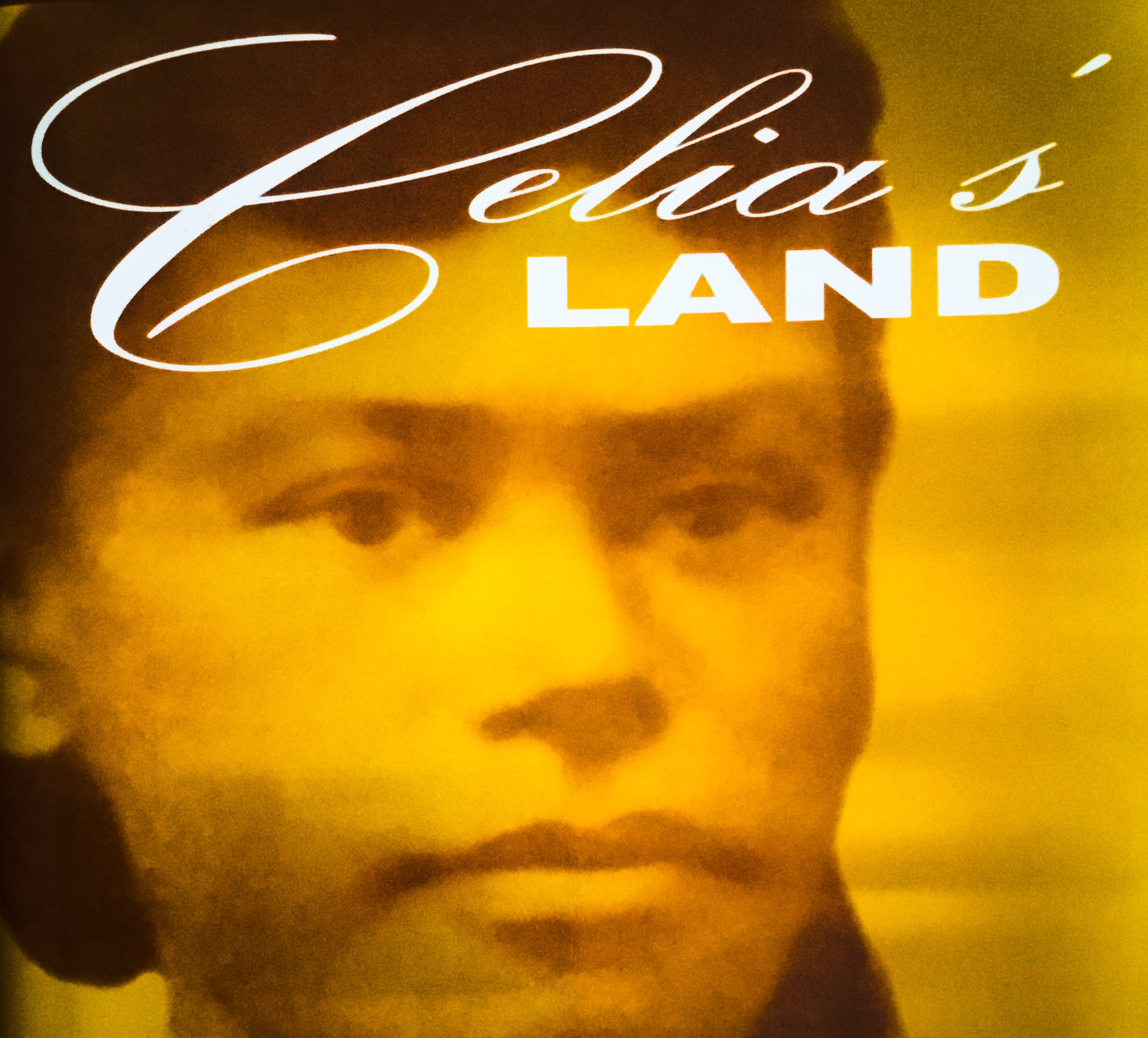
        In 2003, I visited the farm on which Aunt Celia spent her life. Stepping into the old slave quarters where she was born, I reflected on how much we still don’t understand about that time, when Whites, however “humane” they tried to be, believed that Black people were no more than property. I also thought about how we too often choose to ignore or downplay the racial inequities that continue to this day. Over the next months, we co-authored a novel, Celia’s Land, based on her ancestor’s extraordinary journey. To learn more, go to Plantation Politics and other chapters of The Inheritance posted online. 
        Until our collaboration, Celia’s story — either before or after her legal struggle — remained virtually unknown. Once she won in court, she began a second life, got married and became a role model and beloved benefactor for her community and members of her family. She paid for her sister’s children to attend Catholic school, hired relatives to work the farm, and actively encouraged the young women in her family to pursue their dreams. Although she never had children of her own, she became a mother for many. 

        “I want my people to progress,” she explained, “and the only way they can is to have an opportunity for an education. If it means leaving the country, so be it.” She lived long enough to see many of her nieces and nephews graduate from high school.

        Celia’s life, as well as Georgia’s, says much about how to handle uncomfortable truths with dignity and grace. Rather than arguing about who needs to apologize for which past wrong, whether it is slavery or a personal mistake, what we need more is the strength to face our own and society’s secrets — to openly acknowledge them, but also to reconcile and forgive. 

        After all, even role models are just human beings.


THE INHERITANCE by Greg Guma