Showing posts with label Greg Guma. Show all posts

Saturday, May 31, 2025

Maverick Origins: What’s in a Name?

Although the slide toward autocracy has been my recent focus, I’m also revising and releasing selections from Witness to the Fall, a collection of relevant previously published work — autobiographical reminiscences, as well as essays published in recent years. The introduction is below, followed by links to several chapters.


Subscribe and stay in touch 

I’ve been publicly sharing research and my views on local, national and global issues for more than half a century. At first in a high school paper and university magazine, then professionally in newspapers, magazines and online. My earliest regular column, for a Vermont daily, appeared in 1969 in the midst of the Vietnam war and cultural revolution of that era. I called it “Polarities in Our Time.”


About nine years later, when an “alternative” weekly was launched in Burlington, I tried again in a column called “Immediate Release.” It leaned more toward reportage — enterprise journalism and interviews — but continued to reflect subjects of personal interest, regardless of whether they were attracting public attention at the time. When I became editor of that paper, I dropped the column but wrote editorials weekly.


In 1983, after leaving the Vermont Vanguard Press, I syndicated a column that appeared in several newspapers — until taking a break, and an extended journey across the country and through Mexico. It was time to reflect and rethink my assumptions. 


More than a decade passed until I wrote an ongoing column again. The opportunity emerged when I returned to Vermont after several years in New Mexico and California, plus travels and life in Denmark and Germany. This time it was for another weekly. I called the reports “Maverick Chronicles.”


The name was chosen for several reasons. In 1985, I’d launched Maverick Bookstore and Gallery, which became a lively oasis in Burlington’s Old North End for several years during the Sanders era. The name felt appropriate, philosophically and also because the Lloyds, my son’s family on Robin Lloyd’s side, were actually related to the Maverick clan in Texas. 


Samuel Maverick was a pioneer with a big personality and the origin of the modern usage of the word. The official story is that he won a ranch in a card game and afterward declined to brand his steers. Unbranded steers became known around San Antonio as mavericks.


The TV show Maverick was pure fiction, but Brett Maverick was a cheeky anti-hero and personal favorite in my youth. There was also a real and large, real Maverick clan. Lola Maverick married Robin’s grandfather, who became famous briefly as a so-called “Communist millionaire.” Lola helped organize the Ford Peace Ship before World War I and co-founded the Women’s International League for Peace and Freedom. Some of their children were activists as well, including Robin’s dad Bill. I would eventually become editor of Toward Freedom, the publication he founded in 1952.


So, when I thought about launching an independent business, as well as continuing my journalism and peace work, using Maverick to help define it felt apt. On the first anniversary of the bookstore, a group of modern Texas Mavericks sent a ceramic calf as a gift.  Since running the bookstore, which later relocated downtown and eventually merged with the local peace center’s book business, I have used it as a handle and publishing imprint. In 1997, “Maverick Chronicles” began a two year run as a weekly column in The Vermont Times, a weekly successor to The Vermont Vanguard Press


In the decades since then, I’ve written hundreds of essays for a variety of outlets, online and in print. You can find many of them on websites like the Center for Global Research, Toward Freedom, Truthout, VTDigger, ZNetwork, Muckrack and UPI. Books are available from Amazon. Now, along with the current series of posts released on Substack, I’m reviving Maverick Chronicles as a kicker and framework one more time.


A Writer’s Life


Even back in grade school, I felt the urge to communicate. Art and music came easily enough, but writing was irresistible. It felt like a compulsion. Over time, through economic and social necessity, I added the roles of editor and manager to the mix, and at times agent of change. Taking shape gradually, my goal was responsible advocacy, informed by a search for truth and a commitment to social justice and right livelihood. Those efforts, beliefs, commitments, and aspirations led to memorable encounters, journeys and insights I try to share — before I forget.


As Bill Maher once said, “With age comes wisdom, but only if you can remember it.”


I started writing stories at about 10, mostly short plays and satirical skits, performed in classes at holidays or special events. Next, as editor of The Lance, the student paper at Holy Cross High School, I took an early shot at opinion writing. Before graduating, reviews were appearing in a Long Island daily. At Syracuse University there was some newswriting and a supplement for the Daily Orange, plus essays and satire for Vintage, the campus magazine I designed and edited. 


In Bennington, still 21, it was a stretch to manage the daily newspaper’s darkroom and write everything from accidents to features on a deadline. But ultimately the Bennington Banner was a priceless training opportunity, time to get past any writer’s block.


After that on-the-job training, also an invaluable introduction to Vermont life, I was hired by Bennington College, where I mostly wrote press releases and covered promotional events, but also edited a quarterly, and experienced professional alienation for the first time. Luckily, the job didn’t last long and was followed by a mentally healthy shift into counseling and public service. Before long, however, the management at Champlain Work and Training Programs figured out that I could also write grants, which led to consulting work with school systems. Eventually, I wrote a federal grant for myself, which led to a campus office and graduate degree at the University of Vermont.


By 1975, I was teaching journalism and planning skills at the fledgling Burlington College, and running a local used bookstore called The Frayed Page with other members of a collective. The store was an organizing center for the growing anti-nuclear movement and spun off a magazine, culminating in a people’s history of the state. That eventually grew into Restless Spirits & Popular Movements: A Vermont HistoryI also freelanced for news services, magazines and community papers until a group of UVM grads launched two alternative weeklies in one year. The second presented a golden opportunity to use much of what I had learned about journalism and Vermont so far.


During my years with the Vanguard Press, I produced more than 50 cover stories and hundreds of news stories and features. For the first time since college I could experiment with New Journalism and test boundaries, trying anything the publishers allowed, writing first drafts of stories that would stay with me, developing and evolving for years. I also exposed public and private misdeeds, and interviewed everyone from prisoners and protesters to presidential wannabes.


Beyond that, I was part of a movement that transformed Burlington, produced a new Vermont political party, and launched the career of Bernie Sanders. That story was retold in two books, The People’s Republic and Managing ChaosFor decades my work has included an eclectic mixture of freelance assignments and investigations, trips, trials and profiles, syndicated columns, study guides, documentary scripts, candidate speeches, ad campaigns, position papers, conference addresses, radio broadcasts, legislative testimony, quarterly and annual reports, and grants for just causes from immigrant rights to nuclear sanity and environmental justice. Persuasive communication was part of almost every job.


Eventually, there were also 15 books, which rarely paid that well. My favorite is Spirits of Desire, a paranormal mystery set in the 1870s. In contrast, ghost writing was lucrative, though sometimes frustrating. After spending months looking deeply into a subject, despite being Buddhist it was tough to stay unattached when someone else took the credit.


Since February I’ve been thinking and writing about the slide toward an American-style autocracy. Going forward, some essays will continue to look at current events, but there will also be selections from Witness to the Fall, a collection of previously published work for periodicals and websites. I’ll share autobiographical reminiscences from the 1970s and 1980s, and articles developed and published during the last 15 years.


New essays on current events will be posted as the struggle to preserve democracy and human rights continues.


Witness to the Fall — Chapters


Unstuck in Time: When “The Plan” Blew Up

Bennington, Vonnegut and a Campus Breakdown


Consciousness & Conscience: Finding Right Livelihood

Lessons of Buddhism, Bernie and Public Service


The Rise of the Electronic Messiah, Part One


The Rise of the Electronic Messiah, Part Two


Democratic Distemper: Carter and the Trilateral Commission


Coming Up: Conspiracies and Reagan Myths


I hope you’ll subscribe (It’s currently free!) and stay in touch. 

https://mavmedia.substack.com/

Friday, March 14, 2025

MANAGING CHAOS: Adventures in Alternative Media

An eye-witness account that explores the unique, tumultuous history of Pacifica radio and alternative media in America. 

“a great read…revealing and sometimes brutal” 

the Progressive

Full Review: Who Will Tell Us the News?


“A real page-turner” — David Goodman and Marc Stern

On the Air: Radio with a View interview, 9/22/2024


On Town Meeting TV: 

Meghan O’Rourkc interviews Greg and Robin Lloyd 


After an eclectic career, Greg Guma discusses the evolution of radio and television, the impacts of concentrated media ownership, the rise of the alternative press, his own work in Vermont — before and during a progressive revolution that changed the state’s power structure, and decades later, how he managed the original listener-supported radio network. 


Weaving together an intimate chronicle of what he saw as Pacifica Radio’s first post-revolution CEO and episodes from his earlier life as a stressed out student, rookie reporter, radical organizer and unconventional editor, Guma explores the challenges of maintaining democratic institutions in a culture of distrust and polarization, of striking the delicate balance between truth and advocacy, observation and participation, and of managing conflicts with persuasion instead of force. 


Managing Chaos is a media saga, a personal story, and a cautionary tale.


…a skilled writer who has immersed himself in Vermont life and politics for decades.  — Sasha Abramsky


…the first executive in Pacifica who has been willing, and able, to share his experiences…. They ought to be required reading for all PNB and LSB members.  —  Nalini Lasiewicz


…a powerful voice. — Michel Chossudovsky 


Buy Managing Chaos

317 Pages, illustrated, Maverick Books


From the book…


“The deeper I looked the more convoluted and intractable the problems appeared: Charges and counter-charges of secrecy, waste, racism, sexism, harassment and violence, turf battles over local fiefdoms, manipulation, and alleged fraud. It seemed like a fratricidal war with no end in sight. 


“It reminded me of how easily reality can be blurred by misinformation. That July, Jeff Ruch, the director of Public Employees for Environmental Responsibility, had issued a relevant assessment of a much larger and even more dysfunctional organization. ‘The federal government,’ he concluded, ‘is suffering from a severe disinformation syndrome.’ 


“Could this be what afflicted Pacifica? Spurious theories presented as facts, information massaged to promote a specific spin, cherry-picked evidence. Whether intentional or not, Pacifica’s convoluted politics and history seemed to have created, as Bob Woodward put it in his book that summer about Watergate source Deep Throat, “an entire world of doubt."


“Who could unravel such a mess, no less get the larger community to look beyond its debilitating bitterness and distrust? Probably not a middle-aged activist editor from one of the smallest, whitest states in the country….” 


“…. The chance to work at Pacifica radio came my way by accident. More than a decade earlier I’d met an activist librarian on a plane by striking up a conversation about Z, a left-wing magazine she was reading. Even before 9/11, you rarely saw people on airplanes engrossed in “alternative” publications. 


“At the time I was editing Toward Freedom, a small but respected magazine that had covered international affairs from a “progressive perspective” since the early 1950s. We hit it off, and the librarian provided an invaluable stream of news, ideas and leads for articles over the next decade. She was also a loyal yet disgruntled listener to a Pacifica station, and when the top job became available, she let me know. 


“I had some of the qualifications, starting with management and development experience. In my twenties, I worked with schools and anti-poverty groups developing paraprofessional training programs. In my thirties, I edited Vermont’s groundbreaking alternative weekly, the Vanguard Press, and helped usher in a progressive political era. I led the revival of Toward Freedom and, for more than a decade, edited and wrote on global politics. I also launched and ran bookstores in Burlington and Santa Monica, CA, and coordinated progressive organizations that worked on peace, justice, and immigration issues in Vermont and New Mexico. Just the year before, I had co-founded a new statewide weekly, Vermont Guardian, with local investors. So, there was all of that. 


“Still, it didn’t feel right to me at first…” 


Buy Managing Chaos: Adventures in Alternative Media 

Interested in writing a review? Request copy at Mavmediavt@gmail.com


Other Excerpts

Bringing War Back Home

The Road to Change

Friday, June 28, 2024

Media Maverick: Guma’s Writing Explores Alternatives

“After almost two months and endless hours of teleconference debate, Pacifica’s national board had reached a decision. It seemed impossible, but the “old white guy” from Vermont was being offered the dream job from hell. The catch was that I had ten days to decide. And two weeks to get to Berkeley.” — from Managing Chaos

…a skilled writer who has immersed himself in Vermont life and politics for decades.  — Sasha Abramsky


…the first executive in Pacifica who has been willing, and able, to share his experiences…. They ought to be required reading for all PNB and LSB members.  —  Nalini Lasiewicz


By Eugene M. Scribner

BURLINGTON, VT — Managing Chaos: Adventures in Alternative Media is Greg Guma’s intimate look back at his experiences over 60 years as a journalist, activist, editor and progressive manager — of newspapers and magazines, social change organizations and Pacifica Radio, the country’s original listener-supported network. 

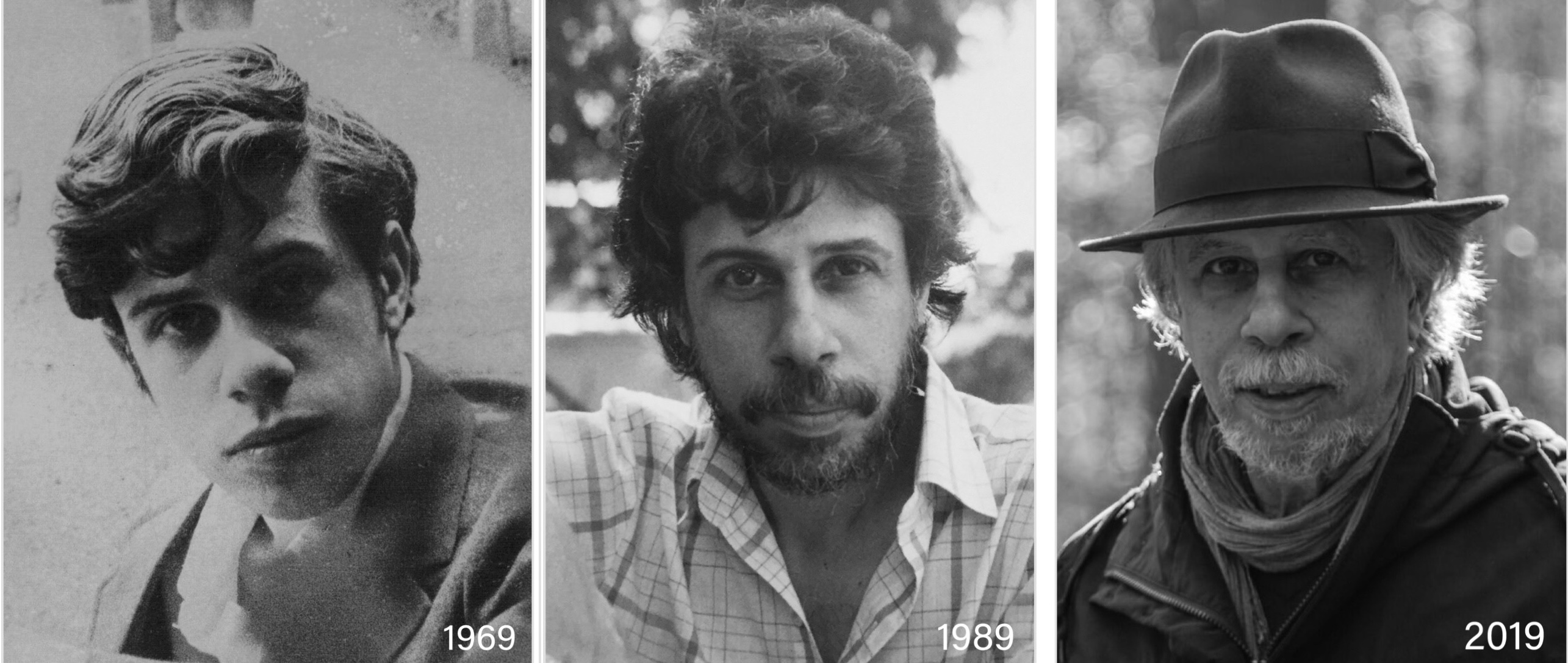
Photos: Left, by Kat Farnham/Bennington; Center, Anne Winther/Burlington; Right, Jesse Guma/Rochester

His 15th book — in a career that formally began in 1968 with reporting and taking photos for the Bennington Banner, a southern Vermont daily, Managing Chaos discusses the evolution of radio and television, the impacts of concentrated media ownership, the rise of the alternative press, and his own work — before and during the progressive revolution that changed Vermont’s power structure 

Weaving together a lively, granular account of what he saw as Pacifica Radio’s “post-revolutionary” CEO for two years and episodes from his earlier life as a stressed out student, rookie reporter, and radical organizer, Guma also explores the challenges of maintaining democratic institutions in a culture of distrust and polarization — striking the balance between truth and advocacy, observing and participating, the personal and political — and of managing conflicts with persuasion instead of force. 

He calls Managing Chaos “a media saga, a personal story, and a cautionary tale.” The 317-page, illustrated paperback edition will be published by Maverick Books and available for online orders July 25, 2o24. For review copies or interviews, email Mavmediavt@gmail.com.

From 1978 to 1990, Guma edited and wrote for The Vermont Vanguard Press, a groundbreaking alternative weekly, and syndicated feature articles and columns internationally for decades. He also started and managed three bookstores, including Maverick Media in Burlington and Revolution in Santa Monica. Beginning in 1986, he began editing a progressive global affairs publication, Toward Freedom, continuing for more than 12 years. In 2004, he co-founded another weekly, Vermont Guardian, with Shay Totten. He became Pacifica’s Executive Director in 2006.

From Politics to the Paranormal

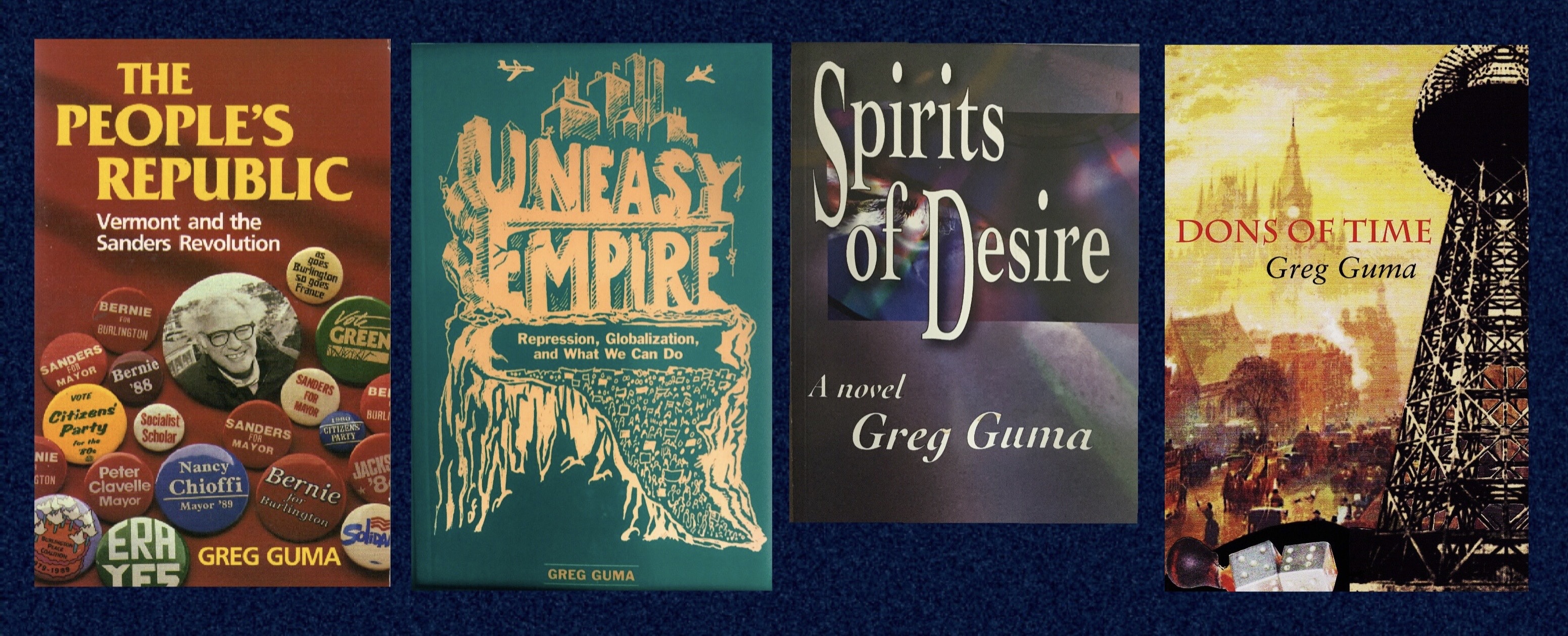
In 1989, Guma wrote The People’s Republic: Vermont and the Sanders Revolution, an eye-witness account of how the state went from being loyally Republican to culturally and politically progressive. At the time former Governor Phil Hoff called it “the most complete, knowledgeable and fairest description” of Bernie Sanders’ mayoral years. More than 25 years later, Guma and the widely-praised book became primary sources for leading journalists covering Sanders’ two presidential campaigns.

Working with UVM’s Center for Research on Vermont, he recently followed up with Restless Spirits & Popular Movements: A Vermont History (2021), which revisits the state’s past through memorable events and people, “reclaiming stories sometimes lost or forgotten along the way.” Vermont History lauded it for drawing from “decades of reporting to offer insights into some of the major political actors and movements from the late 1960s to the present.”

One of the early stories that captured Guma’s eye concerned the Eddys, a family of alleged mediums in central Vermont during the 1870s, and the remarkable people who converged on the family’s farm and “circle room.” After writing about this for several publications, including Fate Magazine, he developed an historical novel based on what he had learned, one that dramatizes the events and characters surrounding the fateful meeting of investigator Henry Olcott and Helena Blavatsky, the remarkable occultist who created the Theosophical movement. 

A romantic mystery of the paranormal, Spirits of Desire (2004) has been compared to E.L. Doctorow’s Ragtime. According to Joe Citro, it’s a well-told, remarkable story playing out “against a tapestry of social, intellectual, religious, political and scientistic forces.” 


More recently, Guma revisited the same period with Into the Mystic (2023), which digs into the actual events dramatized in the novel, and explains spiritualist and theosophical beliefs, as well as subjects like karma, reincarnation, and astral projection. Spirits of Desire was the inspiration for Woman of Another World, a film adaptation currently being developed by Nora Jacobson. 


Guma has co-authored books with world citizen pioneer Garry Davis and Kentucky civil rights leader Georgia Powers. Working with Robin Lloyd and Green Valley Media, he’s written scripts and narrated documentaries about Haiti, Guatemala, Vietnam and the legendary Bread & Puppet theater troupe. Here’s an example: Journey Home. He also edited the colorful photo book, Bread &. Puppet: Stories of Struggle and Faith from Central America (1985). 

Davis and Guma worked together on two books, the first a recap of Davis’ decades as leader of the world citizen movement. In addition, their Passport to Freedom: A Guide for World Citizens (1992) explains how to use the World Passport and other documents Davis created and distributed to defend human rights around the world. They followed up with A Global Odyssey (2000), which covers Davis’ later exploits challenging borders and spreading world citizenship in Japan.


Powers asked Guma to work with her to dramatize the life of a beloved ancestor in 2002. The result was Celia’s Land (2004), which combines history with informed, sympathetic speculation. It reveals how Powers’ aunt, Celia Mudd, who was born into slavery before the Civil War, became owner of the Lancaster family’s farm in Kentucky, and defended her rights in an extraordinary 1903 trial.

In 2003, Guma completed Inquisitions (and Other Un-American Activities), a play dramatizing the struggle for workers rights and civil liberties, especially Chicago’s 1886 Haymarket riot and show trial. It uses the interrogation of activist Lucy Parsons during the 1919 Palmer raids to explore timely themes and recreate the movement for an eight-hour workday, the Haymarket bombing, and hanging of four activists.  Since initial performances at Burlington City Hall, it has been distributed as an audio drama, airing on hundreds of radio stations and available as a podcast series.

Guma’s other books include Uneasy Empire (2003), about the struggle over globalization and post- 9/11 repression; Big Lies (2011), looking at how corporations, politicians and media can warp reality and undermine democracy; Progressive Eclipse (2012), a follow up to The People’s Republic; Dons of Time (2013), a novel Kirkus calls “well-constructed, action-flooded sci-fi set in a realistic historical world”; Fake News (2018), on journalism in the “age of deceptions”; Planet Pacifica (2021), a short introduction to the network’s problems; and Prisoners of the Real (2023), an intellectual journey about the price of hyper-rationalism and control that opens the door to a new vision of freedom and cooperation.

Eugene M. Scribner is a retired social critic discussed in Managing Chaos. His writing ran in Vermont publications from 1973 to 1999.

Bread & Puppet (editor) * The People’s Republic * Passport to Freedom Uneasy Empire * Reign of Error (editor) * Celia’s Land * Inquisitions * Spirits of Desire * Dons of Time *  Progressive Eclipse * Big Lies 

Fake News * Planet Pacifica * Restless Spirits & Popular Movements 

Into the Mystic * Prisoners of the Real * Managing Chaos

From New England Press, Seven Locks, Toward Freedom, University of Vermont and White River Press, Fomite, Maverick Books