Showing posts with label Kentucky. Show all posts

Friday, October 10, 2025

The Trials of Celia — a touching slice of American life

 “A unique and unknown side-story of American history, researched brilliantly, told beautifully.”                   Jim DeFilippi

“Guma has brought a troubled but touching slice of American history to life.”                                                                    — Kirkus Reviews

A New Novel

Available November 26, 2025


Celia Mudd began life as a slave. But in 1902, Sam Lancaster — once her master — made her the main beneficiary of his will. Now she could own the Kentucky farm on which she has lived — as servant and employee — for more than 40 years. 


But first she has to defend her inheritance. During a controversial trial, she faces Robert Lancaster, who claims the land is rightfully his and, before dying, his brother must have been incompetent, insane or seduced to make such a gift.


Based on a true story, using trial transcripts, letters and personal reflections, The Trials of Celia reveals how two families — one free and white, another enslaved and black — became intertwined after their arrival in America 200 years before. Against the backdrop of the 1903 trial, it focuses on four decades — from 1862 to the early 20th century — moving back and forth, exploring social dynamics during the Civil War, how emancipation created fresh challenges, conflicting courtroom testimony, and the complex relationships between Celia,  Ann Lancaster — the white woman who educated her, and the brothers who struggled over control of the land they all loved.


The Trials of Celia is an engaging historical mystery and a moving family drama of struggle, deceit, faith, guilt and reconciliation.


“The relationship between Celia and Sam is well handled in all its contradictions. There are two people bound by their time and place but tentatively reaching out to each other. Racism rules that society like a despotic god, but for once basic decency—and something very much like love—wins out.”                             

— Kirkus Reviews    


Zoom Video Interview: Blue Smoke and Black Ink with Jim DeFilippi      


RECENT BOOKS


             THEORY                               SPIRIT                             MEDIA


PRISONERS OF THE REAL (2023)


Fear and domination are leading the planet to a dead end. But there is a way forward, transformative leadership that goes beyond blind rationality and authoritarian solutions. 


Buy Prisoners of the Real 


Summary: Embracing Change


INTO THE MYSTIC (2023)


The amazing true story of how Helena Blavatsky and Henry Olcott brought ancient Eastern wisdom to the West and created the foundation for the modern New Age movement. 


Companion to Spirits of Desire, currently being adapted for film


Buy Into the Mystic


Film Website: Woman of Another World


MANAGING CHAOS (2024)


An eye-witness account that explores the unique, tumultuous history of Pacifica radio and alternative media in America.  


Buy Managing Chaos


Review: Who Will Tell Us the News?

Friday, June 28, 2024

Media Maverick: Guma’s Writing Explores Alternatives

“After almost two months and endless hours of teleconference debate, Pacifica’s national board had reached a decision. It seemed impossible, but the “old white guy” from Vermont was being offered the dream job from hell. The catch was that I had ten days to decide. And two weeks to get to Berkeley.” — from Managing Chaos

…a skilled writer who has immersed himself in Vermont life and politics for decades.  — Sasha Abramsky


…the first executive in Pacifica who has been willing, and able, to share his experiences…. They ought to be required reading for all PNB and LSB members.  —  Nalini Lasiewicz


By Eugene M. Scribner

BURLINGTON, VT — Managing Chaos: Adventures in Alternative Media is Greg Guma’s intimate look back at his experiences over 60 years as a journalist, activist, editor and progressive manager — of newspapers and magazines, social change organizations and Pacifica Radio, the country’s original listener-supported network. 

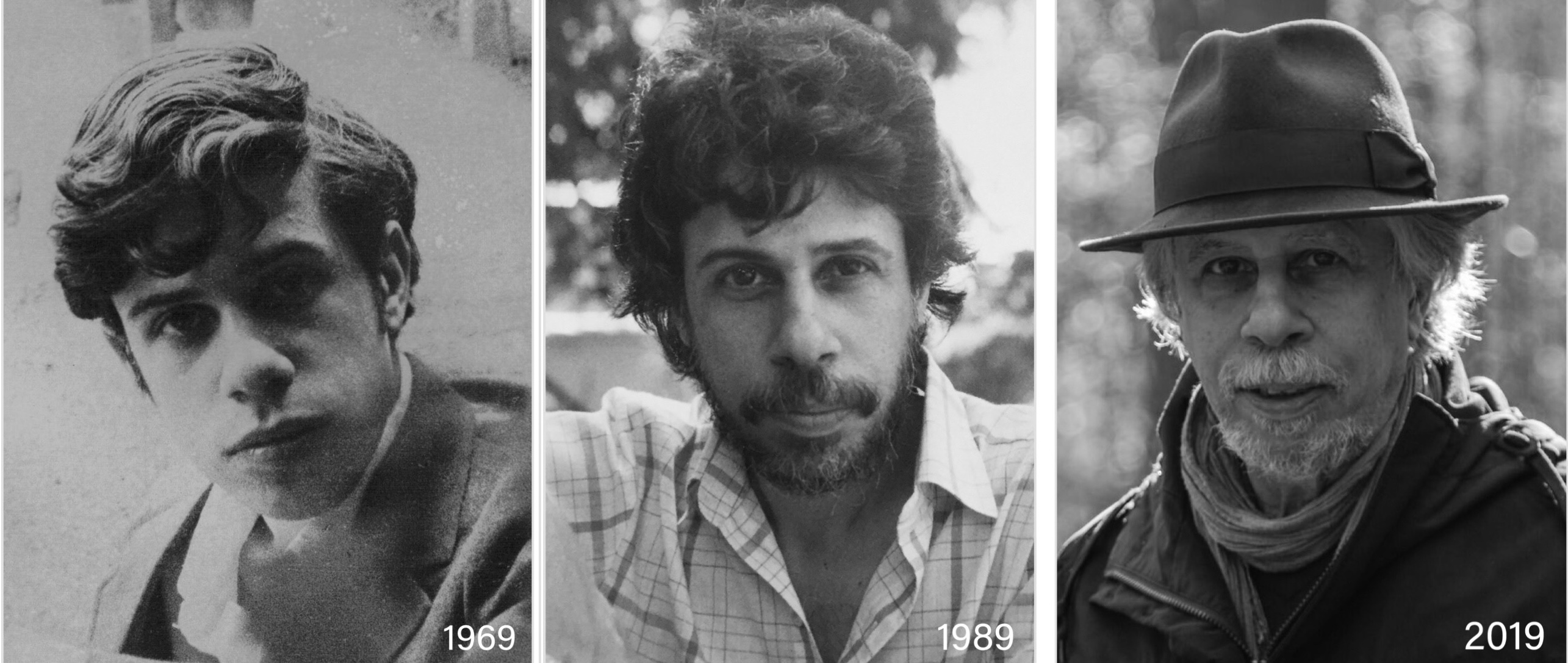
Photos: Left, by Kat Farnham/Bennington; Center, Anne Winther/Burlington; Right, Jesse Guma/Rochester

His 15th book — in a career that formally began in 1968 with reporting and taking photos for the Bennington Banner, a southern Vermont daily, Managing Chaos discusses the evolution of radio and television, the impacts of concentrated media ownership, the rise of the alternative press, and his own work — before and during the progressive revolution that changed Vermont’s power structure 

Weaving together a lively, granular account of what he saw as Pacifica Radio’s “post-revolutionary” CEO for two years and episodes from his earlier life as a stressed out student, rookie reporter, and radical organizer, Guma also explores the challenges of maintaining democratic institutions in a culture of distrust and polarization — striking the balance between truth and advocacy, observing and participating, the personal and political — and of managing conflicts with persuasion instead of force. 

He calls Managing Chaos “a media saga, a personal story, and a cautionary tale.” The 317-page, illustrated paperback edition will be published by Maverick Books and available for online orders July 25, 2o24. For review copies or interviews, email Mavmediavt@gmail.com.

From 1978 to 1990, Guma edited and wrote for The Vermont Vanguard Press, a groundbreaking alternative weekly, and syndicated feature articles and columns internationally for decades. He also started and managed three bookstores, including Maverick Media in Burlington and Revolution in Santa Monica. Beginning in 1986, he began editing a progressive global affairs publication, Toward Freedom, continuing for more than 12 years. In 2004, he co-founded another weekly, Vermont Guardian, with Shay Totten. He became Pacifica’s Executive Director in 2006.

From Politics to the Paranormal

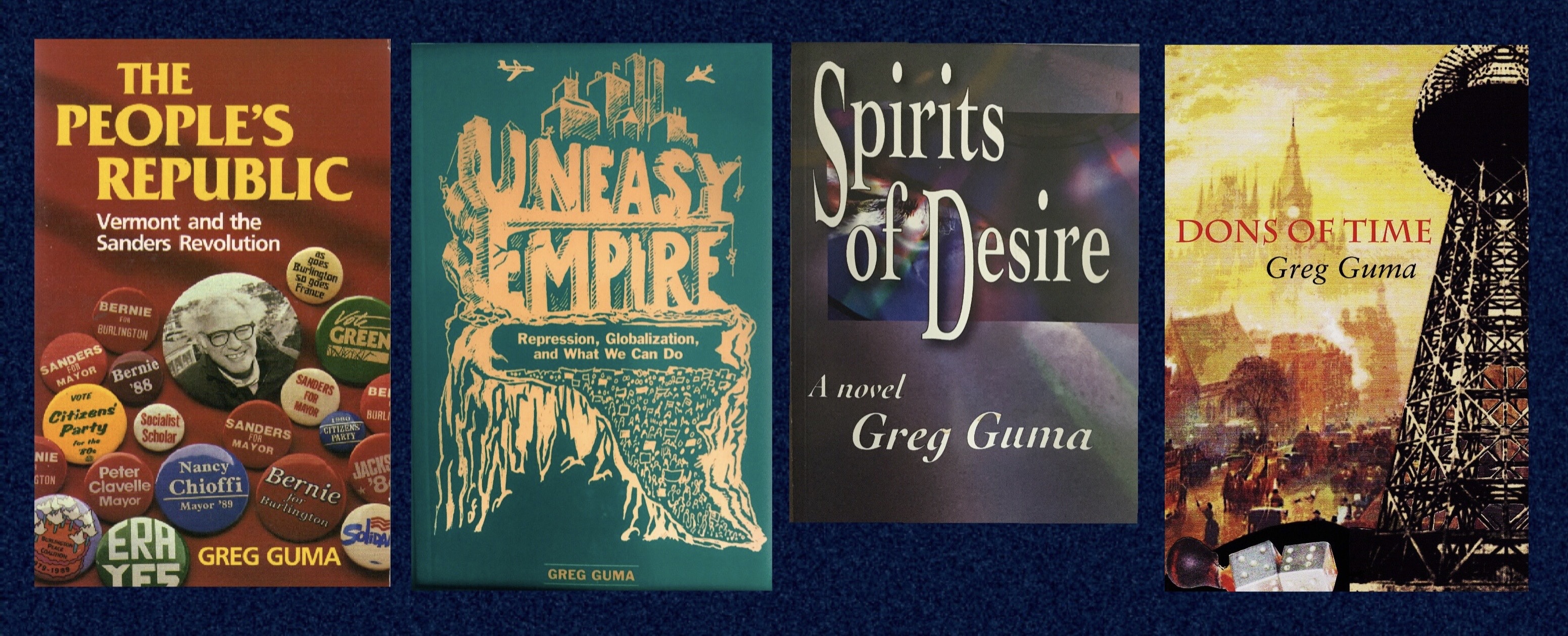
In 1989, Guma wrote The People’s Republic: Vermont and the Sanders Revolution, an eye-witness account of how the state went from being loyally Republican to culturally and politically progressive. At the time former Governor Phil Hoff called it “the most complete, knowledgeable and fairest description” of Bernie Sanders’ mayoral years. More than 25 years later, Guma and the widely-praised book became primary sources for leading journalists covering Sanders’ two presidential campaigns.

Working with UVM’s Center for Research on Vermont, he recently followed up with Restless Spirits & Popular Movements: A Vermont History (2021), which revisits the state’s past through memorable events and people, “reclaiming stories sometimes lost or forgotten along the way.” Vermont History lauded it for drawing from “decades of reporting to offer insights into some of the major political actors and movements from the late 1960s to the present.”

One of the early stories that captured Guma’s eye concerned the Eddys, a family of alleged mediums in central Vermont during the 1870s, and the remarkable people who converged on the family’s farm and “circle room.” After writing about this for several publications, including Fate Magazine, he developed an historical novel based on what he had learned, one that dramatizes the events and characters surrounding the fateful meeting of investigator Henry Olcott and Helena Blavatsky, the remarkable occultist who created the Theosophical movement. 

A romantic mystery of the paranormal, Spirits of Desire (2004) has been compared to E.L. Doctorow’s Ragtime. According to Joe Citro, it’s a well-told, remarkable story playing out “against a tapestry of social, intellectual, religious, political and scientistic forces.” 


More recently, Guma revisited the same period with Into the Mystic (2023), which digs into the actual events dramatized in the novel, and explains spiritualist and theosophical beliefs, as well as subjects like karma, reincarnation, and astral projection. Spirits of Desire was the inspiration for Woman of Another World, a film adaptation currently being developed by Nora Jacobson. 


Guma has co-authored books with world citizen pioneer Garry Davis and Kentucky civil rights leader Georgia Powers. Working with Robin Lloyd and Green Valley Media, he’s written scripts and narrated documentaries about Haiti, Guatemala, Vietnam and the legendary Bread & Puppet theater troupe. Here’s an example: Journey Home. He also edited the colorful photo book, Bread &. Puppet: Stories of Struggle and Faith from Central America (1985). 

Davis and Guma worked together on two books, the first a recap of Davis’ decades as leader of the world citizen movement. In addition, their Passport to Freedom: A Guide for World Citizens (1992) explains how to use the World Passport and other documents Davis created and distributed to defend human rights around the world. They followed up with A Global Odyssey (2000), which covers Davis’ later exploits challenging borders and spreading world citizenship in Japan.


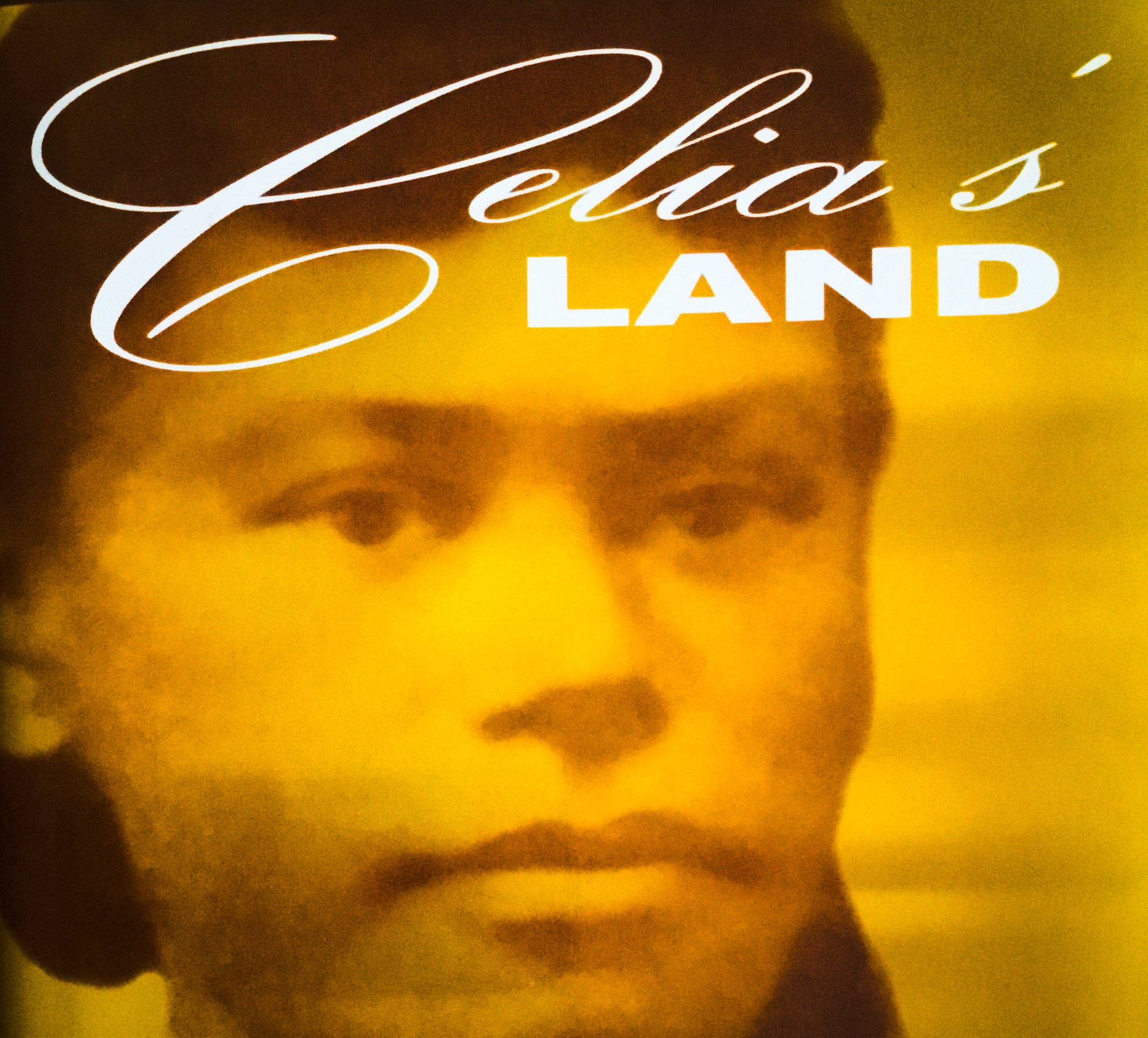
Powers asked Guma to work with her to dramatize the life of a beloved ancestor in 2002. The result was Celia’s Land (2004), which combines history with informed, sympathetic speculation. It reveals how Powers’ aunt, Celia Mudd, who was born into slavery before the Civil War, became owner of the Lancaster family’s farm in Kentucky, and defended her rights in an extraordinary 1903 trial.

In 2003, Guma completed Inquisitions (and Other Un-American Activities), a play dramatizing the struggle for workers rights and civil liberties, especially Chicago’s 1886 Haymarket riot and show trial. It uses the interrogation of activist Lucy Parsons during the 1919 Palmer raids to explore timely themes and recreate the movement for an eight-hour workday, the Haymarket bombing, and hanging of four activists.  Since initial performances at Burlington City Hall, it has been distributed as an audio drama, airing on hundreds of radio stations and available as a podcast series.

Guma’s other books include Uneasy Empire (2003), about the struggle over globalization and post- 9/11 repression; Big Lies (2011), looking at how corporations, politicians and media can warp reality and undermine democracy; Progressive Eclipse (2012), a follow up to The People’s Republic; Dons of Time (2013), a novel Kirkus calls “well-constructed, action-flooded sci-fi set in a realistic historical world”; Fake News (2018), on journalism in the “age of deceptions”; Planet Pacifica (2021), a short introduction to the network’s problems; and Prisoners of the Real (2023), an intellectual journey about the price of hyper-rationalism and control that opens the door to a new vision of freedom and cooperation.

Eugene M. Scribner is a retired social critic discussed in Managing Chaos. His writing ran in Vermont publications from 1973 to 1999.

Bread & Puppet (editor) * The People’s Republic * Passport to Freedom Uneasy Empire * Reign of Error (editor) * Celia’s Land * Inquisitions * Spirits of Desire * Dons of Time *  Progressive Eclipse * Big Lies 

Fake News * Planet Pacifica * Restless Spirits & Popular Movements 

Into the Mystic * Prisoners of the Real * Managing Chaos

From New England Press, Seven Locks, Toward Freedom, University of Vermont and White River Press, Fomite, Maverick Books 

Sunday, April 2, 2023

Georgia Powers & Celia Mudd: Reclaiming Untold Stories

She was uncomfortable with rumors distorting her relationship with Martin Luther King Jr. But Georgia Powers realized that her life, like many, contained secrets and hidden truths. One concerned her ancestry.


Commentary by Greg Guma


Our lives are haunted by secrets — things kept from us by society, friends, even our own families. Just when we think the whole story is on the table, another revelation forces us to reconsider how we look at the world, our leaders, and ourselves.

        This was brought home for me during several visits to Kentucky, where I spent time with one of that state’s most beloved civil rights leaders, Georgia Davis Powers. Invited to discuss a book she wanted to write about one of her ancestors, I learned surprising things not only about the suppressed history of a Black family, but also about the life of Martin Luther King Jr.

Georgia Davis Powers in 2004

        Powers, who died in 2016, was the first African American and the first woman to be elected to Kentucky’s State Senate. That was in 1967. She served five terms over the next 20 years and was a delegate to the Democratic National Convention four times between 1968 and 2004. She was also State Chair of both Jesse Jackson for President campaigns. 

        By 1967, she had already participated in countless marches held for open housing in Louisville, as well as marches for sanitation workers in Memphis and St. Petersburg. Along the way, she had gotten to know King. 

        On April 4, 1968, he was assassinated on the balcony of a Memphis motel as he prepared to support striking Black sanitation workers there. Although James Earl Ray initially confessed to the crime (later recanting), doubts about the full circumstances persist. For example, former FBI agent Donald Wilson, who investigated the murder, later presented evidence he claimed to have found in Ray’s car — slips of paper that might support charges of a conspiracy involving federal agents. But Wilson hadn’t produced the evidence earlier, he claimed, because he didn’t trust other investigators and feared for his family’s safety. 

        The King family questioned the official version and was eager to see Ray get a new trial before he died of liver cancer.

        In a way, it is easier to accept that King was the victim of a secret conspiracy than to face other facets of his life. As Powers put it, "He was a great man — but he was still a man." 

        Like Bill Clinton, whose accomplishments as president were overshadowed by the relentless investigation of alleged personal misbehavior, King was hounded by FBI Director J. Edgar Hoover, who hoped to discredit the civil rights leader by exposing alleged "womanizing." For decades, many civil rights leaders dismissed such charges as mean-spirited attempts to sully King’s memory and discredit his historic achievements.

        Powers certainly had no intention of doing that. On the contrary. She had worked closely with King, organizing to end discrimination in public accommodations and employment and pass open housing laws. During her first term in the Kentucky legislature, less than a month before King’s death, she spearheaded passage of a statewide open housing bill.

        But her relationship with King was more than professional. As she revealed in her 1995 book, I Shared the Dream, their work together had led to a love affair that continued until the last moments of his life. Keeping that secret for almost three decades, she went public only after other civil rights leaders released inaccurate accounts of their relationship and the events surrounding King’s death. 

        She was particularly upset by comments in an autobiography written by Ralph Abernathy, King’s close friend and confidante. Though willing to attribute Abernathy’s misstatements to illness and a poor memory, Georgia Powers felt compelled to set the record straight. "When Dr. King’s life is researched," she wrote, "I want the part relating to me to be available in my own words. It is my own history as well, both the good and the bad."

        It began with mutual admiration, she explained, and "progressed into a deepening friendship in which we shared opinions, confidences, and laughed often." She called him "M.L.," and he called her "Senator." But King was under tremendous pressure, and ultimately turned to Georgia for intimacy and emotional support. Although they sometimes discussed issues and strategies, his main unmet need was time to let his hair down and set his cares aside.

        "Some people called him a prophet, and compared him with Jesus," she recalled. While she also believed that he was divinely inspired, "I knew Martin had all the imperfections, foibles, and passions of a mortal man." A meticulous person with an affection for silk suits, he enjoyed laughter and jokes, barbecued ribs and soul food, not to mention the company of attractive women. In short, "he had a good appetite for life."

        King also had a strong sense that he wouldn’t get to see his visions come to pass. Tired and melancholy one night, he told her, "I’m just as normal as any other man. I want to live a long life, but I know I won’t get to."


        Powers was in Memphis with King on the day he died. The previous night he had confided, "I’ve never been more physically and emotionally tired." On April 4 they waited most of the day to see if a temporary restraining order against the planned demonstration would be lifted. But King was adamant. Regardless of what the court decided, he promised, "We will march on Monday." 

        When Abernathy asked whether he feared what might happen, King answered slowly, "I’d rather be dead than afraid."

        As the meeting broke up and the group prepared for a soul food dinner, King brushed past Georgia on his way out the door. "I’m looking forward to a quiet and peaceful evening," he said softly. "Don’t make any plans." They were the last words he ever spoke to her. Moments later he was shot.

        Looking back, she regretted that her actions may have hurt others, especially King’s wife. But despite those feelings, she never regretted her decision, realizing that it wasn’t merely a tawdry affair. "When we were together," she recalled, "the rest of the world, whose problems we knew and shared, was far away. Our time together was a safe haven for both of us. There we could laugh and speak of things others might not understand. He trusted me, and I him, not to talk about it."

        As the years passed, however, Georgia became increasingly uncomfortable with the rumors that distorted their relationship. She also realized that her life, like so many, contained secrets and hidden truths. One concerned her own ancestry; although she didn’t know the identity of her father’s father, she eventually learned that he was White. Another involved her great aunt, Celia Mudd, who was born into slavery in 1859 but eventually inherited the rural Kentucky farm on which she had spent all her life. As a child, Georgia often asked how it happened. For her parents and other family members, it was apparently a story better left untold.

        Nevertheless, over the years she managed to uncover much of the true story. The key was a will dated March 15, 1902, in which Sam Lancaster, whose father had bought the Nelson County farm over 60 years earlier, left it to his most trusted employee — the former slave whom Georgia Powers knew as Aunt Celia. That fateful decision led to a court battle with Sam’s surviving brother, and the predictable rumors that Celia and Sam had been lovers. But a medical examination proved conclusively that this was impossible. At the age of 42, Celia Mudd was still a virgin.

        Although the case went to Kentucky’s highest court, most newspapers declined to report about it. A Black woman inheriting more than 500 acres of land from a White man apparently wasn’t considered news. Neither was the fact that Celia Mudd went on to become a local philanthropist, admired by Blacks and Whites alike.


        In 2003, I visited the farm on which Aunt Celia spent her life. Stepping into the old slave quarters where she was born, I reflected on how much we still don’t understand about that time, when Whites, however “humane” they tried to be, believed that Black people were no more than property. I also thought about how we too often choose to ignore or downplay the racial inequities that continue to this day. Over the next months, we co-authored a novel, Celia’s Land, based on her ancestor’s extraordinary journey. To learn more, go to Plantation Politics and other chapters of The Inheritance posted online. 
        Until our collaboration, Celia’s story — either before or after her legal struggle — remained virtually unknown. Once she won in court, she began a second life, got married and became a role model and beloved benefactor for her community and members of her family. She paid for her sister’s children to attend Catholic school, hired relatives to work the farm, and actively encouraged the young women in her family to pursue their dreams. Although she never had children of her own, she became a mother for many. 

        “I want my people to progress,” she explained, “and the only way they can is to have an opportunity for an education. If it means leaving the country, so be it.” She lived long enough to see many of her nieces and nephews graduate from high school.

        Celia’s life, as well as Georgia’s, says much about how to handle uncomfortable truths with dignity and grace. Rather than arguing about who needs to apologize for which past wrong, whether it is slavery or a personal mistake, what we need more is the strength to face our own and society’s secrets — to openly acknowledge them, but also to reconcile and forgive. 

        After all, even role models are just human beings.


THE INHERITANCE by Greg Guma